

In the ultra-high-strength steel field (Yield Strength ≥ 960 MPa), improving the yield-to-tensile ratio typically means controlling and lowering the initial Y/T (from an elevated 0.95 down to around 0.88–0.90) to widen the gap between yield point and tensile strength, while simultaneously pushing total elongation above 17%.
This gives structural members excellent strain-hardening and ductile energy-dissipation capacity after yielding — the ultimate technical indicator for preventing sudden brittle fracture in infrastructure. To achieve and maintain these two ultra-high performance indicators, both “microstructural metallurgical control” at the steel mill and “EN 1011 heat control” during fabrication must be addressed:
The core physical logic for lowering Y/T and raising elongation is increasing the material’s strain-hardening index (n-value). After the material passes the yield point, the internal microstructure can undergo strain-hardening during continued deformation, significantly raising tensile strength (Rm), thereby lowering Y/T and extending the deformation length before fracture.
Q&P process introducing metastable retained austenite (TRIP effect): The steel mill abandons the conventional full-martensite Q&T process in favour of the Q&P (Quenching & Partitioning) process combined with precision low-temperature tempering, successfully stabilising 5%–15% thin-film retained austenite within the extremely hard martensitic matrix. When the section undergoes plastic deformation in service, the retained austenite is strain-induced to transform into new martensite (the TRIP effect). This continuous dynamic phase transformation provides enormous strain-hardening driving force, lowering Y/T to around 0.9 and pushing total elongation above 17%, perfectly breaking the physical deadlock between strength and ductility.
TMCP controlled-cooling technology: Through TMCP (Thermomechanical Controlled Processing) with large reduction rolling to refine grains, followed by precision staged controlled cooling. The hard phase (martensite) provides the 960 MPa strength base, while the soft phase (acicular bainite / ultra-fine-grained ferrite) provides good ductility and slip space. The strain inhomogeneity between hard and soft phases effectively controls Y/T and raises elongation.
The excellent low Y/T and high elongation of S960 sections delivered by the steel mill are highly dependent on precision-locked microstructures. Subsequent manufacturing processes must strictly follow EN 1011, or these excellent physical dividends will be instantly destroyed:
Low heat input welding to prevent HAZ softening: If welding heat input is too high, the HAZ undergoes severe grain coarsening and martensite decomposition. Elongation in that local zone rapidly degrades to near zero, Y/T approaches 1.0, becoming the weakest link that fractures upon tension. Per EN 1011, heat input must be hard-limited to 0.5–1.5 kJ/mm. Robotic automatic welding (e.g. precision pulse, CMT power mode, or the most advanced laser welding) is strongly recommended, using precise closed-loop heat control to minimise HAZ softening and embrittlement.
Prohibiting any medium-high-temperature secondary tempering (PWHT): Interpass temperature for multi-pass welding must drop below 180 °C. After welding, conventional 600 °C stress-relief annealing (secondary tempering) or high-temperature flame heat straightening is absolutely prohibited! High temperature completely destroys the fine-grained microstructure and retained austenite locked by the mill’s low-temperature tempering and partitioning, causing section strength to plummet, elongation to be lost, and the structure to be declared scrapped.
Eliminating hydrogen-induced delayed cracking: Per EN 1011-2, only immediate 200 °C–250 °C low-temperature post-heat (dehydrogenation) with 2–4 hours’ holding is permitted, forcing diffusible hydrogen to escape and eliminating delayed cracking while not damaging the base metal’s high elongation and low Y/T.
Cutting allowance with 3 mm mechanical removal (eliminating hardened edges): High-strength steel forms a microscopic hardened layer and notch micro-cracks at edges during shearing or thermal cutting due to extremely rapid cooling. After cutting, a milling machine or grinder must remove at least 3 mm depth from edges, thoroughly clearing the elongation-loss zone caused by localised cold/thermal stress, ensuring subsequent bending or loading does not crack from the edge.
Conventional high-strength steel is mostly delivered as plates, making secondary forming difficult and prone to springback and cracking that destroy elongation during workshop bending. Peak Kong Special Steel, through advanced automated laser welding (Laser Fused) technology, directly prefabricates high-performance S690/S960 steel with excellent low Y/T (~0.9) and outstanding elongation (≥17%) into a full range of structural long sections and hollow sections:
• Laser-welded open sections: Laser Fused H-Beams, I-Beams, Channels, Angles, and Unequal Angles.
• High-end hollow structural sections: Large-diameter thick-walled tubes (CHS), Square Hollow Sections (SHS), Rectangular Hollow Sections (RHS).
If you are undertaking technical selection of high-performance S960 structural sections for highway bridges, super-tall core-wall transfer storeys, or large stadium long-span trusses, and need more detailed microstructural data, HAZ hardness traverse test results, and third-party HOKLAS international certification for compiling WPS/WPQR and Method Statements compliant with EN 1011 / EN ISO 15614, please contact the Peak Kong Special Steel technical team. We look forward to deep technical collaboration to build safe, lightweight, high-quality modern green heavy infrastructure!
-
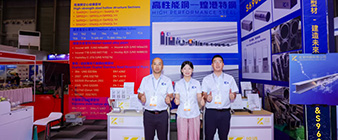 2026-10-06 See you in Stainless Steel World Asia 2026(14–15 October)
 -
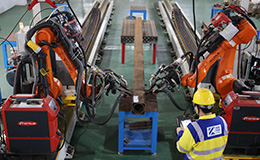 2026-6-16 Composite Hollow Structural Profiles – The Future of Structures
 -
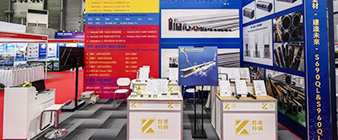 2026-10-05 Peakkong Special Steel successfully completed its participation in the 12th Shanghai International Pipe Materials Exhibition.
 -
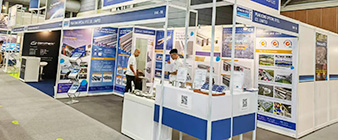 2024-12-06 Peak Kong Special Steel participated in the 2024 Singapore Asia Stainless Steel Exhibition.
 -
 2026-9-17 Advantages of Robotic Welding for S690 High-Strength Steel
 -
2026-9-03 Introduction to High-Strength Steel Structures
-
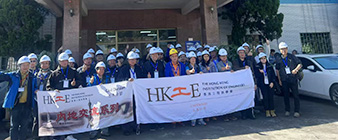 2024-12-06 A warm welcome to the Civil Division of the Hong Kong Institution of Engineers for visiting the Peak Kong Special Steel factory.