

Applicable plate thickness: 8mm – 50mm | Execution Class: EN 1090-2 EXC3 / EXC4 TECHNICAL SUBMISSION / METHOD STATEMENT
This Method Statement of Peakkong Special Steel is specially formulated to govern the entire fabrication and installation process of S690QL ultra-high strength steel (Yield Strength ≥ 690 MPa) with plate thickness ranging from 8mm to 50mm. All procedures shall strictly comply with the following world-class international and European steel structure standards:
• EN 1090-2: Execution of steel structures and aluminium structures – Technical requirements for steel structures (highest execution class EXC3 / EXC4)
• AWS Welding Handbook 9.4: Advanced High-Strength Steels Fabrication Guidelines (Fit-up Assembly and Structural Fastening Control – Peakkong Special Steel)
• EN 1011-1 & -2: Welding — Recommendations for welding of metallic materials (preheating and post-heat hydrogen removal temperature control for high-strength steel)
• EN ISO 15614-1 & ISO 9606-1: Standards for welding procedure qualification and welder certification.
Raw Material Incoming Inspection and Mechanical Property Testing
100% traceability verification: All incoming steel plates must be accompanied by EN 10204 3.1 or 3.2 Material Test Report (MTR). QC inspectors shall verify 100% that the heat number marked on the steel plate surface is consistent with that stated in the MTR.
Tensile and bending test specification (EN ISO 6892-1 / EN ISO 7438): Samples shall be taken batch by batch from 8–50mm steel plates for re-inspection to ensure yield strength (≥ 690 MPa), tensile strength and elongation meet specified requirements.
Low-temperature impact test specification (EN ISO 148-1): Thick high-strength steel plates are prone to low-temperature brittle fracture. Charpy V-Notch impact tests at -40°C or -60°C shall be carried out for the steel to recheck that the impact energy complies with QL/QL1 grade standards.
Closed-loop Welding Qualification: pWPS, WPQR and Formal WPS
pWPS (Preliminary Welding Procedure Specification): Compiled by welding engineers of Peakkong Special Steel according to joint requirements for 8–50mm plates and low heat input criteria, specifying current, voltage, welding speed, ultra-low hydrogen (H5 class) consumables and preheating temperature range.
WPQR (Welding Procedure Qualification Record, EN ISO 15614-1): Actual test plate welding shall be performed under the supervision of an accredited third-party laboratory (e.g. HOKLAS accredited laboratory).
Hardness test specification: In accordance with European standards, the maximum hardness of the Heat Affected Zone (HAZ) of high-strength steel is strictly limited to ≤ 450 HV10.
Impact test specification: Weld metal and HAZ shall pass low-temperature impact tests at the same temperature as the base metal.
WPS (Formal Welding Procedure Specification): After WPQR approval, the pWPS shall be formalized into an official WPS, which serves as the only statutory technical basis for welders in the factory.
Welder Examination and Qualification (ISO 9606-1)
All welders engaged in S690QL welding shall pass ISO 9606-1 examinations and hold valid certificates.
Coverage verification: QC inspectors shall check the validity period of welder certificates, and the qualification coverage (plate thickness, welding processes such as FCAW/GMAW, welding positions such as 3G/4G) shall fully meet actual production requirements.
Edge Preparation Specification (Dual Crack Prevention Mechanical Machining Standard)
Step 1: Laser cutting: High-precision laser cutting machines are used for plate cutting and preliminary groove forming.
Step 2: 3mm mechanical machining specification: Core crack prevention technology After laser cutting, 3mm of the groove edge shall be milled/mechanically removed by a mechanical edge milling machine.
Technical principle and standard: The high temperature of laser cutting produces an approximately 1.5mm thick overheated deteriorated layer (micro martensitic structure) on the edge of S690QL steel. The mandatory 3mm mechanical machining completely removes this hardened layer and restores the pure crystalline structure of the base metal on the groove surface, fundamentally preventing brittle fracture at the welding root caused by local hardening and micro cracks.
Fit-up Assembly Specification (AWS Welding Handbook 9.4)
Implementation standard: Strictly follow the requirements of AWS Welding Handbook 9.4 for fit-up of high-strength steel structures. Special fixtures are adopted to strictly control fit-up gap, groove angle and misalignment.
Forced assembly is prohibited: Tightening by gravity or external forced force is forbidden to minimize additional internal constraint stress of the structure and prevent lamellar tearing of thick plates during welding at the source.
Preheating and Multi-layer Multi-pass Welding (in accordance with EN 1011)
Uniform preheating before welding (100°C – 150°C): Prior to welding, uniform electric heating shall be applied to the weld and both sides using flexible heating bags or crawler-type ceramic heating mats. Local heating by conventional gas torches is strictly prohibited to avoid surface softening caused by overheating annealing.
The preheating zone extends at least four times the plate thickness on both sides of the weld (minimum 75mm), monitored at multiple points in real time by infrared thermometers.
Temperature-controlled multi-layer multi-pass temper welding: During welding, the interpass temperature shall be strictly maintained between 125°C and 180°C. Excessively high temperature (>200°C) will lead to grain coarsening of HAZ and reduce impact toughness.
Welding heat input is strictly controlled at 1.0 – 2.5 kJ/mm as specified in the WPS. Heat from subsequent weld passes provides self-tempering to previous passes to refine the weld microstructure.
Immediate Post-weld Hydrogen Removal and Natural Slow Cooling (Post-heat Stress Relief Treatment)
Timely hydrogen removal (200°C – 250°C): Immediately after welding, before the weld cools to ambient temperature, ceramic heating mats shall be activated to reheat the weld and HAZ to 200°C – 250°C.
Slow cooling wrapped with thermal insulation cotton: After reaching the hydrogen removal temperature, the welding area shall be fully wrapped with thick asbestos thermal insulation cotton for natural slow cooling.
Technical principle: Accelerates the escape of diffusible hydrogen at the interface of weld and base metal at high temperature, greatly releases residual tensile stress generated during welding of 8–50mm steel plates, and completely eliminates the micro driving force of hydrogen-induced delayed cracking (cold cracking).
Weld Grinding Standard
Smooth contour transition: All butt welds, fillet welds and areas requiring NDT shall be precisely ground with angle grinders after welding to form a smooth arc transition with the base metal (transition radius ≥ 10mm); abrupt edges are strictly forbidden.
Requirements for shot blasting and anti-corrosion pretreatment: To facilitate subsequent shot blasting and hot-dip galvanizing processes, all spatter, slag, undercut and arc strikes on the weld surface must be completely removed during grinding. The grinding depth shall not exceed 5% of the base metal thickness, and the direction of grinding marks shall be consistent with the principal stress direction.
Defect repair grinding: If cracks or excessive blowholes are found during visual inspection, air carbon arc gouging or mechanical grinding shall be used to expose sound metal; smooth transition of the groove shall be made before repair welding in accordance with the WPS.
Delayed NDT Inspection Specification
Time locking: After hydrogen removal and slow cooling to ambient temperature, components must stand for 24 to 48 hours (24 hours for plate thickness ≤ 40mm; 48 hours mandatory for plates 40mm to 50mm) before inspection. High-strength steel tends to produce delayed cracks, so immediate inspection after welding is strictly prohibited.
Inspection ratio (as required by EXC3/EXC4): 100% Ultrasonic Testing (UT) plus 100% Magnetic Particle Testing (MT) shall be carried out. MT accurately detects surface and near-surface micro cracks, while UT inspects internal defects for acceptance.
Surface Treatment (Pickling Abolished to Prevent Hydrogen Embrittlement)
Shot blasting to Sa2.5 grade: All components are shot blasted to ISO 8501-1 Sa2.5 standard to ensure excellent surface roughness and cleanliness.
Abolition/reduction of pickling process: Core protection control gate To prevent catastrophic hydrogen embrittlement fracture caused by massive hydrogen absorption of ultra-high strength S690QL steel in pickling solution, automatic shot blasting is mandatory to fully replace traditional pickling.
Galvanizing & Coating Codes
Hot-dip galvanizing specification (EN ISO 1461): Due to the ultra-high strength of S690QL steel, liquid metal embrittlement (LMAC) easily occurs during galvanizing. The factory shall strictly control the composition of zinc bath (especially contents of bismuth Bi and lead Pb), as well as galvanizing time and temperature to avoid galvanizing cracks.
Paint coating specification (EN ISO 12944): The paint system shall be configured according to project environmental corrosion class (e.g. C4/C5), usually high-solid epoxy zinc-rich primer + epoxy micaceous iron intermediate coat + polyurethane topcoat.
Dry Film Thickness (DFT) shall be measured by calibrated film thickness gauges, strictly following the 90-10 rule: 90% of test points reach the designed thickness, and the remaining 10% shall not be lower than 80% of the designed thickness.
Faying surface masking: All faying surfaces of high-strength bolts must be strictly masked during coating to maintain pure blasted surfaces and guarantee the slip resistance coefficient.
Packaging & Site Installation Codes
Packaging specification: Components shall be separated by wooden battens or thick rubber pads. Special corner protectors and high-strength fiber slings shall be used at lifting positions; direct steel-to-steel contact is prohibited to prevent scratches on anti-corrosion paint and geometric deformation of structures.
Delivery approval: Factory certificates and release notes can only be issued after 100% closed-loop approval of all QA/QC records, NDT reports and film thickness reports.
On-site high-strength bolt connection: Grade 10.9 high-strength bolts (HR or HV series) are adopted in strict compliance with Chapter 8 of EN 1090-2. Pre-tightening (75%) and final tightening (100%) shall be performed with regularly calibrated torque wrenches to ensure the slip resistance coefficient μ ≥ 0.5 of faying surfaces.
On-site splicing welding: Windproof, rainproof and moisture-proof tents must be erected on site (welding is prohibited when relative humidity exceeds 85%). Portable heating blankets shall be provided for on-site welding, following exactly the same process as in the factory: 100–150°C preheating plus 200–250°C post-weld hydrogen removal and insulated slow cooling.
H (Hold Point): Work must be suspended; procedures may proceed only after joint inspection and signature by QC and supervisors. W (Witness Point): On-site random inspection of welding or testing processes. R (Review Point): 100% verification and review of written documents including material certificates, test reports and qualification certificates.
The complete documents of Peakkong Special Steel feature rigorous technical logic and clear quality control gates, fully capable of meeting the review requirements and construction standards of world-class high-end, heavy-duty and high-seismic steel structure projects globally.
-
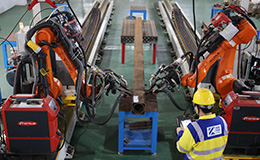 2026-9-09 Low-Temperature Tempering Process for S690 High-Performance Structural Sections
 -
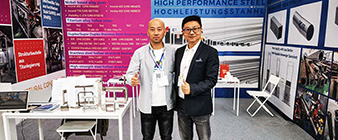 2026-5-28 Peak Kong Special Steel participated in the International Tubular Products Exhibition in Düsseldorf, Germany.
 -
2026-9-17 Who Are the Suppliers of S690 Structural Steel Sections?
-
2026-9-03 Introduction to High-Strength Steel Structures
-
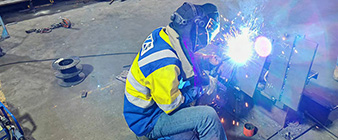 2024-12-31 Peak Kong Special Steel Welding Team Successfully Completes S960QL Ultra-High-Strength Steel PF and PC Welding Procedure Qualification
 -
 2024-12-06 Peak Kong Special Steel Showcases Advanced High-Strength Steel Structural Profiles at WCFS International Conference
 -
2026-9-10 How to Improve the Yield-to-Tensile Ratio and Elongation of S960 Ultra-High-Strength Steel Structural Sections?